Title start

Posts Tagged ‘Medical’

Title end

Birth of the First Real Tricorder

Tuesday, November 17th, 2009

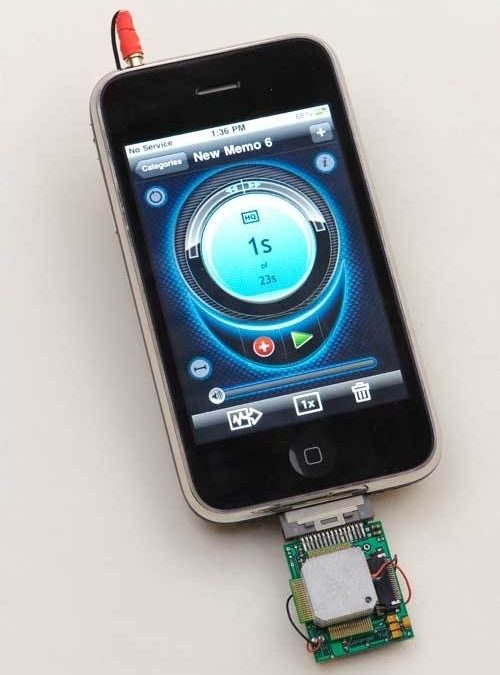
NASA Gas TricorderMany years from now when Tricorders are common place, we just might look back on October 30th 2009 as the birth of the first real tricorder. While the iPhone currently has motion, sound, light, location, radio wave and distance sensors, Jing Li a physical scientist, along with several other researchers at NASA’s Ames Research Center in Moffett Field, California developed a working prototype of a harmful gas detector for the iPhone.

The team, working under the Cell-All program in the Department of Homeland Security’s Science and Technology Directorate, created a small stamp sized detector to be plugged in to an iPhone to “collect, process and transmit sensor data.” The sensor can detect and identify low concentrations of airborne ammonia, chlorine gas and methane.

[Via NASA]

Sun Safety: UV Monkey

Saturday, July 18th, 2009

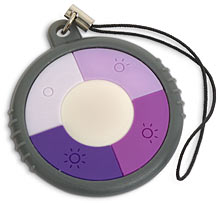
c0c4_uv_monkeyThe strength of the sun’s ultraviolet (UV) radiation is expressed as a Solar UV Index or Sun Index*. Indices of 9 and 10 are common in the Mediterranean area. Here in Los Angeles todays UV Index was 9. But how can you tell if you are getting too much radiation? Think Geek has a keychain device to help you gauge the amount of UV present. It is called the UV Monkey.

[$9.99 Via ThinkGeek :: What's New.]

*The UV Index is a forecast of the amount of skin damaging UV radiation expected to reach the earth’s surface at the time when the sun is highest in the sky (around midday). The amount of UV radiation reaching the surface is primarily related to the elevation of the sun in the sky, the amount of ozone in the stratosphere, and the amounts of cloud cover. However, thick cloud can greatly reduce ultraviolet radiation levels and, surprisingly, certain types of thin cloud can magnify the ultraviolet radiation strength. 

The peak daily ultraviolet radiation level changes over the year. The strongest being at the Summer solstice (21st June) and the weakest at the Winter solstice (21st December).

The UV Index can range from 0 (at night) to 11 or 12. It might even be higher in the tropics and/or at high elevations under clear skies. The higher the UV Index, the greater the dose rate of skin damaging (and eye damaging) UV radiation. Consequently, the higher the UV Index, the smaller the time it takes before skin or eye damage occurs. Find out about your risk and burning time with Weather Online’s skin type table.


Risk of damage to skin
UV INDEX SKIN TYPE
white (burners) white (tanners) naturally brown naturally black
1 low no risk no risk no risk
2 low no risk no risk no risk
3 medium low no risk no risk
4 medium low no risk no risk
5 high medium low no risk
6 high medium medium low
7 very high high medium medium
8 very high high medium medium
9 very high high medium medium
10 very high high high medium

Low risk means that there is nothing to worry about – the sun will not harm you. Redness (erythema) will appear in 2 hours or more (11:00-15:00 GMT) in a UK summer

Medium risk means that the sun is not dangerous, but you should avoid being in direct sunlight for more than 1 to 2 hours. Redness (erythema) will after longer exposition. Burners should apply skin protection factor (SPF) 15 sun screen. All people should wear UV-A+B sun glasses

High risk means you could burn in 30 to 60 minutes. Try to keep out of direct sunlight, cover up or wear a sunscreen lotion SPF 15+. Use protective clothing.

Very high risk means that you could burn severely in 20 to 30 minutes. Stay out of direct sunlight, cover up and use a sunscreen lotion SPF 15+.

People of all skin colour, especially children and babies, can suffer eye damage, over heating and dehydration as a result of excessive sun exposure.

Squad 51, start CPR…

Monday, June 29th, 2009

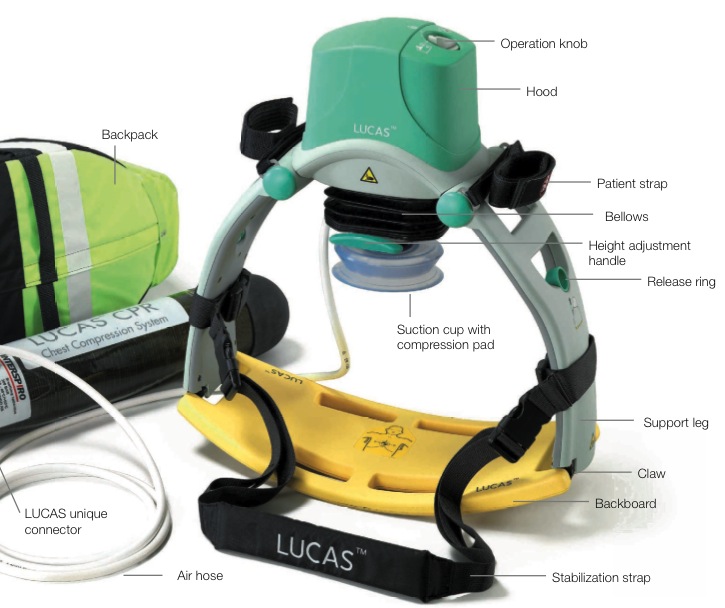
LUCAS 2Manpower is stretched pretty thin when it comes to medical personnel in the field. Having an extra pair of hands perform CPR for you can mean the difference between life & death. Swedish company Jolife AB, has just  realesed the LUCAS 2, a chest compressor for use by paramedics and other field medics. It does just one thing, the simple task of pumping the chest. Which in turn allows the paramedic to continue with other life-saving measures. Unlike its predecessor, LUCAS 1 which is still available ran on compressed air, LUCAS 2 runs on battery power. It can run for up to 45 minutes on a single charge. In May of 2009 it was approved for use in Europe and Canada, and it should be available in the US by the third quarter this year.

[via Jolife]

A Cure for Blindness?

Sunday, June 21st, 2009

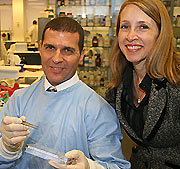
Blind_Stem_cells_insideDr Di Girolamo and Dr Watson of The University of New South Wales, have made a major breakthrough in their quest to restore sight to sufferers of blinding corneal disease. According to the researchers “Sight was significantly improved within weeks of the procedure, which is simple, inexpensive and requires a minimal hospital stay.”

A paper detailing the breakthrough appears in the high-impact journal Transplantation this week.
The trial was conducted on three patients; two with extensive corneal damage resulting from multiple surgeries to remove ocular melanomas, and one with the genetic eye condition aniridia. Other causes of cornea damage can include chemical or thermal burns, bacterial infection and chemotherapy.

All three patients in the trial suffered from extensive corneal damage or aniridia. The researchers are “hopeful the technique can be adapted for use in other parts of the eye, such as the retina, and even in other organs.”

A paper detailing the breakthrough appears in the high-impact journal Transplantation this week. You can find more information on the UNSW website.

[via UNSW]


Clicky Web Analytics